

The Norwegian government has awarded a €3 million grant to help transform the operations of 10,000 smallholder farmers in the country’s soya value chain.
The grant is being implemented through IDH in partnership with AGRA, IITA and YARA under the Making Agrifood Markets Accessible for Soy Farmers (MAMA) programme, which seeks to improve productivity, market access and resilience among smallholder soy farmers in northern Ghana through SME-led sourcing and processing models.
It is a three-year collaborative intervention running from January 2026 to December 2028, with the aim of creating more than 20,750 jobs across the country’s soya value chain.
The programme is led by the IDH Ghana team, with support from IDH global experts. IITA will provide expertise in agronomy, seed systems and climate-smart extension; YARA Ghana will support input supply and crop nutrition; while AGRA will lead policy dialogue and sector convening.
Stronger local soya sector
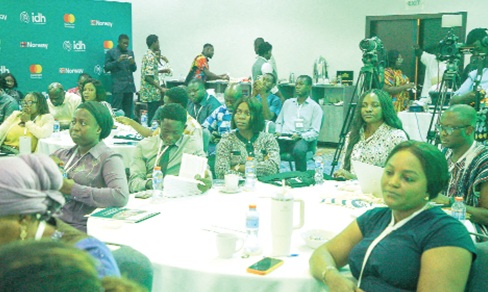
Speaking at the launch of the MAMA programme in Accra on September 30, Norwegian Ambassador to Ghana, John Mikal Kvistad, stated that the initiative was intended to build a soya sector that worked better for farmers, local businesses and the wider economy.
He said the programme would strengthen the entire soya value chain by improving production, seed access, farming practices, market linkages and investment opportunities.
“We want to build a soya sector that works better for farmers, local businesses and to improve the environmental economy,” he stated.
Mr Kvistad said soya was important to Ghana’s food security and nutrition and also supported the poultry and aquaculture sectors.
He stressed that a stronger local industry could reduce pressure on imports and create jobs, particularly in northern Ghana.
He said local small and medium-sized enterprises would be selected and supported to strengthen their capacity and meet the requirements of large-scale buyers, thereby creating better market access for farmers and opportunities across the value chain.
The ambassador said the programme would also prioritise women, with a target of having women constitute 60 per cent of participating farmers, while supporting their access to markets, resources and business opportunities.
He said the launch marked only the beginning of the initiative and urged the government, farmers, businesses and development partners to sustain collaboration to ensure that farmers secured dependable markets, local businesses became stronger and more value-added jobs were created in Ghana.
The Senior Programme Manager at IDH, Rusmond Anyinah, said the MAMA programme had so far engaged about 5,000 smallholder farming families through six participating SMEs, with plans to expand the number to 10,000.
He said the programme had improved productivity through access to better seeds, fertiliser and farmer training, while strengthening linkages between farmers, input suppliers, processors and markets.
Market access key
The Programme Director in charge of Africa Food System Transformation at IDH, Mascha Middlebeck, said the programme sought to address persistent barriers facing smallholder farmers and SMEs, particularly limited access to finance, quality inputs, mechanisation, extension services and structured markets.
She said stronger market linkages between farmers, SMEs and major buyers were critical to creating incentives for farmers to improve production and adopt better farming practices.
“Without access to markets, no incentives can be placed on farms and no incentives can change farm practices,” she stated.
